A Beginner's Guide to CI/CD Pipelines: Concepts, Stages, Benefits and Tools
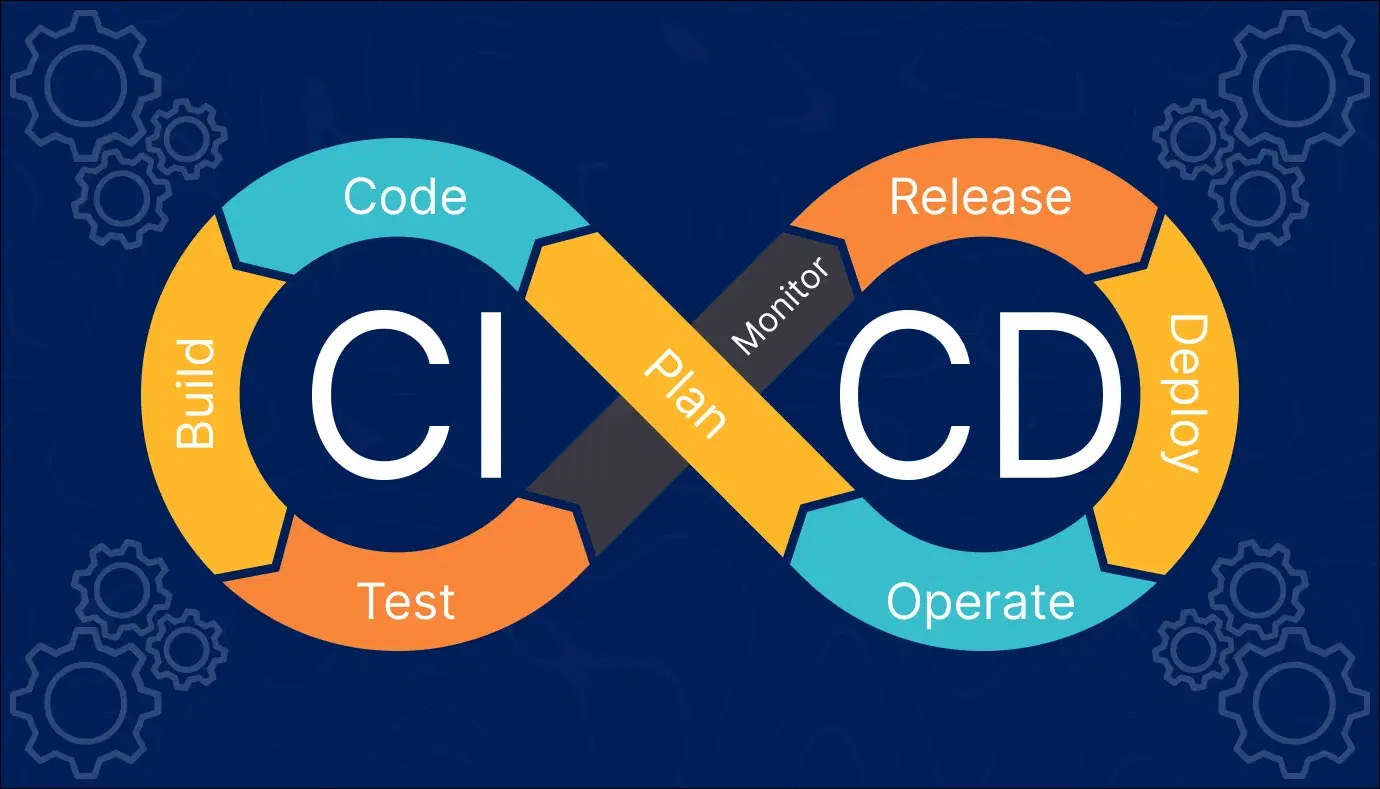
A CI/CD pipeline is an automated sequence of steps that takes a code change from a developer's commit to a tested build and, finally, to production. CI (continuous integration) means every change is merged and tested automatically. CD means the tested build is always ready to release (continuous delivery) or is released automatically (continuous deployment).
This guide explains the core CI/CD concepts, the stages of a typical pipeline, the benefits, best practices for beginners and the most common tools, with a simple example at the end.
CI/CD concepts explained
Continuous integration (CI)
Developers merge small changes into a shared branch often, at least daily. Every merge triggers an automatic build and a set of tests. If something breaks, the team knows within minutes and the change that caused it is small and easy to find.
Continuous delivery (CD)
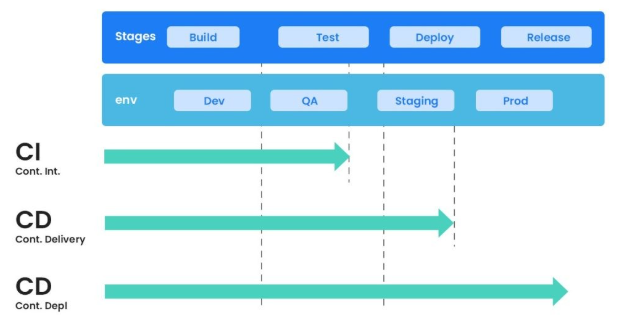
Every change that passes CI is packaged and deployed automatically to a staging environment, so a release to production is a business decision and a single click, not a project.
Continuous deployment
The next step after continuous delivery: every change that passes all automated checks goes to production with no manual approval. It needs strong automated tests and monitoring, so many teams start with continuous delivery.
| Practice | What is automated | Who decides to release |
|---|---|---|
| Continuous integration | Merge, build, unit and integration tests | Not a release step |
| Continuous delivery | Everything up to a production-ready release | A person approves |
| Continuous deployment | Everything, including the production release | The pipeline, if all checks pass |
The stages of a CI/CD pipeline
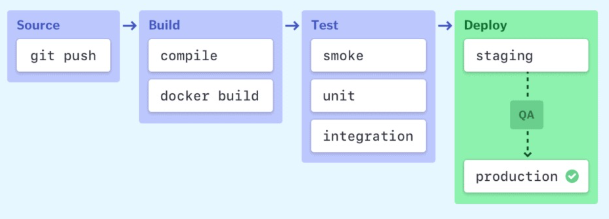
- Source: a commit or pull request in Git starts the pipeline.
- Build: the code is compiled or bundled and dependencies are installed, usually inside a clean container.
- Test: fast checks run first (linting, unit tests), then slower ones (integration, end-to-end).
- Security and quality scans: dependency vulnerability checks, static analysis and secret scanning.
- Package: the build is stored as a versioned artifact, such as a Docker image in a registry.
- Deploy to staging: the artifact is deployed to an environment that mirrors production for final checks.
- Release to production: manual approval (continuous delivery) or automatic (continuous deployment), often using blue-green or canary releases.
- Monitor: error rates and performance are watched after release, with an automated rollback if they spike.
Benefits of CI/CD
- Bugs are found sooner: small, frequently tested changes are cheaper to fix than large, late ones.
- Releases become routine: deployment is a repeatable script, not a weekend event.
- Faster feedback: users get improvements sooner and the team learns what works.
- Fewer manual errors: the same automated steps run every time.
- Easier rollback: versioned artifacts make it simple to redeploy the last good version.
- Visible progress: everyone can see what is built, tested and deployed.
CI/CD best practices for beginners
- Keep everything in version control: code, pipeline configuration, infrastructure definitions and database migrations.
- Start small: automate build and unit tests first, then add stages one at a time.
- Run fast tests first: fail in under ten minutes when possible so developers stay focused.
- Build once, deploy many times: promote the same artifact through staging and production.
- Use clean, identical environments: containers stop "works on my machine" problems.
- Never store secrets in code: use the CI tool's secret store or a vault.
- Fix a broken main branch first: a red pipeline is the team's top priority.
- Measure delivery performance: track the DORA metrics, including deployment frequency, lead time for changes and change failure rate.
Popular CI/CD tools
| Tool | Type | Good fit when |
|---|---|---|
| GitHub Actions | Hosted, built into GitHub | Your code is on GitHub and you want minimal setup |
| GitLab CI/CD | Hosted or self-managed | You use GitLab and want source, CI and registry in one place |
| Jenkins | Self-hosted, open source | You need full control and many plugins, and can maintain servers |
| CircleCI | Hosted | You want fast hosted pipelines with strong caching |
| Bitbucket Pipelines | Hosted, built into Bitbucket | Your team is on Atlassian tools |
| Azure Pipelines / AWS CodePipeline / Google Cloud Build | Cloud-native | You deploy mainly to one cloud provider |
| Argo CD | GitOps for Kubernetes | You deploy to Kubernetes and want Git as the source of truth |
A simple example pipeline
For a web application stored on GitHub and deployed as a container:
- A developer opens a pull request.
- GitHub Actions installs dependencies, runs the linter and unit tests.
- On merge to main, it builds a Docker image, scans it and pushes it to a registry with the commit ID as the tag.
- The image is deployed to staging automatically and end-to-end tests run against it.
- A team lead approves the production release; the same image is deployed with a canary rollout.
- If error rates rise, the pipeline redeploys the previous image.
New to containers? Our Docker architecture guide explains images, registries and containers.
Frequently asked questions
What is the difference between CI and CD?
CI merges and tests every change automatically. CD takes the tested change and gets it ready to release (delivery) or releases it (deployment).
Which CI/CD tool is best for beginners?
The one built into where your code already lives: GitHub Actions for GitHub, GitLab CI/CD for GitLab, Bitbucket Pipelines for Bitbucket. They need the least setup.
Do small teams need CI/CD?
Yes. Even a two-person team saves time and avoids broken releases with an automated build and test step.
How long does it take to set up a CI/CD pipeline?
A basic build-and-test pipeline can run in a day. A full pipeline with staging, security scans and automated rollback usually takes a few weeks to get right.
Get help with your pipeline
Ellocent Labs designs and maintains CI/CD pipelines as part of our DevOps services, including automated testing. Book a discovery call to review your current release process.
Not sure which approach is right for your project?
We've built both. We'll tell you honestly which one fits.
From no-code MVPs validated in 6 weeks to enterprise AI platforms with 50,000+ users, we've built across the whole range. Book a consultation and we'll tell you honestly which approach fits your budget, your timeline, and your scale ambitions.
Book a discovery call