Ellocent Labs at Dubai AI Festival 2026: AI Governance, Infrastructure and the Future of Work
Listen to this article
Two Ellocent Labs team members, one from business operations and one from AI and automation engineering, will attend Dubai AI Festival on 26 and 27 October 2026 at the Dubai World Trade Centre. To arrange a conversation, email business@ellocentlabs.com or book a discovery call.
We are heading to Dubai to hear how other teams handle AI governance, to learn from the programme, and to meet people working on the same problems. In our own projects, governance and infrastructure cost tend to end up as the same decision: someone approves how AI output is reviewed, and someone signs off what it costs to run.
Two of our team are joining the festival as visitors. Below you will find the themes we plan to follow, the four questions we are bringing, and how to arrange a conversation.
What is Dubai AI Festival 2026?
According to the official site, the festival is run by Dubai AI Campus, with DIFC and Dubai AI Week as co-hosts. The programme uses formats such as fireside chats, workshops and roundtables.
The published themes are AI for all, global AI governance, immersive experiences, innovation and ethics, future of work, AI cornerstone, AI literacy, and infrastructure and investment. We cannot cover all eight, so we picked the ones closest to our own work.
Who from Ellocent will be there?
- Sundeep Kaur, Director of Business Operations
- Sandeep Kaur, AI | Automation Engineer
One leads business operations and the other works on AI and automation engineering, so between them they can talk about both the commercial and the technical side of a project.
Why are we going?
We are growing our work in AI engineering, cloud infrastructure and automation, and the festival programme overlaps with all three. That gives us three reasons to go.
- Partner meetings. To meet companies that might work alongside us on larger projects.
- New client conversations. To talk with teams planning AI, automation or custom software work who want a second opinion on how to approach it.
- Learning. To see what people are building, and to compare how other teams handle problems we already work on.
Which themes will we follow, and what do we want to ask?
Ellocent is not an investor or a policy body, so we read the programme as engineers. Below are four areas, the official themes they connect to, what we have already built, and one question we would like answered.
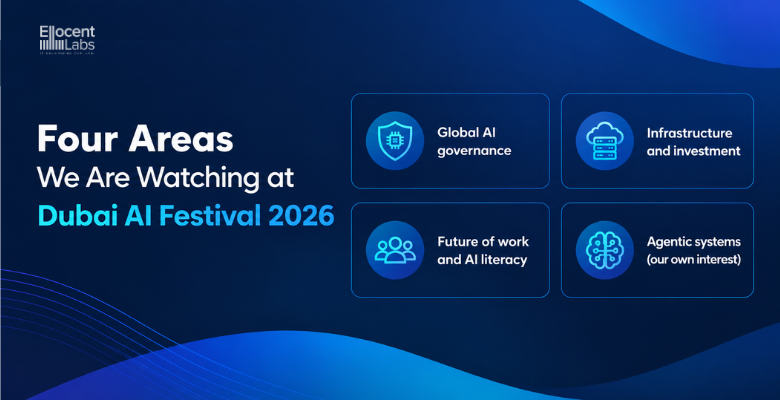
Global AI governance, and innovation and ethics
Our rules are simple. AI never touches production, a person reviews every line of code, and a client who wants no AI in their project can have an AI-free contract. The detail is on our engineering practices page.
The same thinking shaped our investor relations platform for ASX-listed companies. AI only drafts announcements from a company's own history. A person reviews each draft in a queue, publishing is explicit and reversible, and an audit record cannot be edited by the application. For regulated businesses, that sequence of draft, review, publish and record is what governance looks like in code. Our ASX investor relations guide goes through it in more detail.
Our question: how are teams proving that a human reviewed an AI output, in a way an auditor or regulator could check later?
Infrastructure and investment
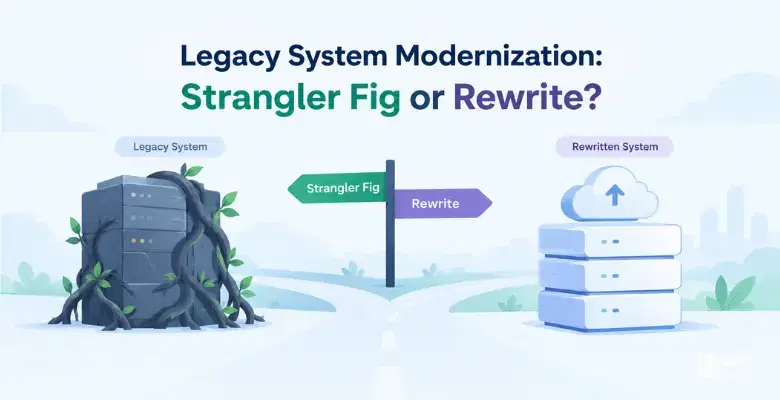
We look at this from the cost side: what AI and data workloads cost to run, and how architecture changes that. An aviation data platform we worked on was a monolithic Java application handling more than 1 TB a day in batches that took six to eight hours. We re-architected it as an event-driven system on AWS. Insight now arrives in seconds and cost came down by about half. The full story is in the aviation data solution, and our event-driven and serverless page explains the approach. If you are weighing a similar choice, our legacy modernization guide covers when to re-architect and when to rewrite.
Our question: how do teams decide between shared AI infrastructure and running their own as usage grows, and what does that do to the cost of each request?
Future of work and AI literacy
These are two separate themes on the festival site, but we treat them together because they meet in one place: whether people can trust what an AI system tells them. We built a CV-scoring product where each score comes with reasons a recruiter can read, because a score nobody can explain is hard to act on. Inside Ellocent the same idea applies to our own engineers. AI tools help, and a person still owns every line.
Our question: what does AI literacy mean for non-technical staff in practice? Is it training, or is it better product design?
Agentic systems (our own interest, not an official theme)
This one is our curiosity rather than a festival theme, so we will keep it short. We have worked on products that meter AI usage, route requests between models and check the sources behind an answer. Agent-style systems, where software plans and takes several steps on its own, make each of those harder.
Our question: how much autonomy are teams comfortable giving an agent before a human step is required?
How can you meet the team at Dubai AI Festival?
- Email business@ellocentlabs.com with the day you prefer and a time window in Dubai time.
- Or book a discovery call. Mention Dubai in the booking note so we know you would like to meet in person.
We cannot promise every slot, but we will answer as quickly as we can. If you are not going to Dubai, the discovery call works from anywhere. Our team also works with Australian companies remotely through ellocentlabs.com.au, and you can see how we work with clients on our engagement models page.
What happens after the festival?
Once the team is back, we will write up what we saw and learned, including how other teams answered the four questions above. We will add it here and link it from this section.
Frequently asked questions
When and where is Dubai AI Festival 2026?
Dubai AI Festival 2026 runs on 26 and 27 October 2026 at the Dubai World Trade Centre in Dubai, UAE.
Is Ellocent Labs exhibiting or speaking at Dubai AI Festival?
Two of our team are attending as visitors, so you will not find us at a booth or on a stage. To meet them, email business@ellocentlabs.com or book a discovery call.
Who from Ellocent Labs is attending?
Sundeep Kaur, Director of Business Operations, and Sandeep Kaur, AI | Automation Engineer.
What does Ellocent Labs want to learn at Dubai AI Festival 2026?
We want to learn how teams prove human review of AI output, how they weigh the running cost of AI infrastructure, what AI literacy means in practice, and how much autonomy agentic systems should get.
Does Ellocent Labs have an office in the UAE?
No. We do not have an office in the UAE at the moment. We work with clients remotely, and this trip is a chance to meet people in person.
Does Ellocent Labs work with companies in Australia?
Yes. We work with Australian companies remotely, including ASX-listed businesses, through our Australian site at ellocentlabs.com.au
How do I arrange a meeting with Ellocent Labs in Dubai?
Email business@ellocentlabs.com or book a discovery call, and say which day you prefer and a time window in Dubai time.
Not sure which approach is right for your project?
We've built both. We'll tell you honestly which one fits.
From no-code MVPs validated in 6 weeks to enterprise AI platforms with 50,000+ users, we've built across the whole range. Book a consultation and we'll tell you honestly which approach fits your budget, your timeline, and your scale ambitions.
Book a discovery call